

How to Apply
How to apply for counselling training
Applying for counselling training is not simply an administrative step. It is part of the learning process.
We invite you to approach this application as a space for reflection, designed to help you think about your readiness, your motivations and what it might mean to begin training at this stage in your life.
We take care to ensure that our training is right for you and right for the profession. That means considering your wellbeing, your development and the responsibilities that come with working ethically with others.
We are interested in you as a person, not just your qualifications. This is the beginning of a professional journey, and we want it to start in the right place.
Completing the application is the first step in shaping your professional identity.

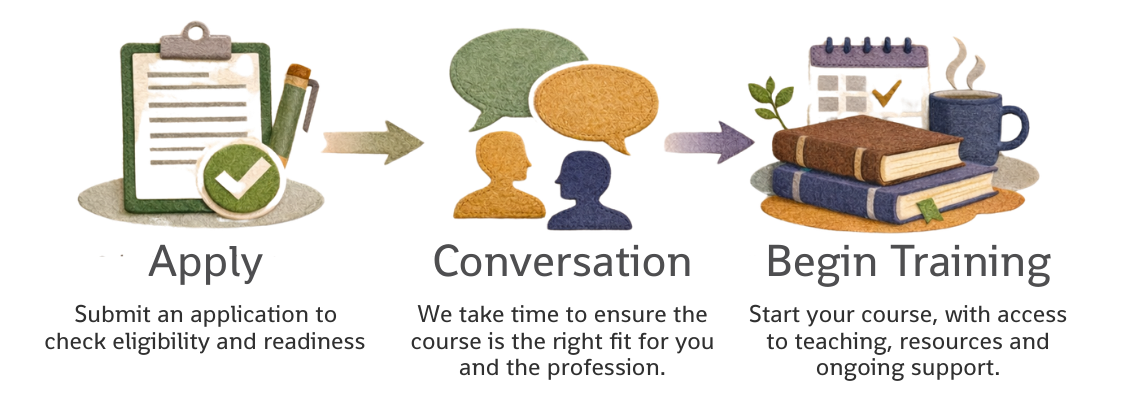
Our Step by Step application process
Application Form
You complete a written application, outlining your background, motivations and readiness.
Conversation
We will arrange a convenient time to have a Zoom call, to explore suitability, expectations and fit.
Decision and next steps
If the course is right for you and we accept your application, we guide you through enrolment and preparation.
Applying for The Foundation Certificate (Level 2 equivalent)
What we look for:
A genuine curiosity about people, relationships and human behaviour
An openness to exploring your own thoughts, feelings and experiences
A willingness to listen, learn and consider different perspectives
Respect for others, including their experiences, beliefs and differences
Enthusiasm for participating in group discussions, skills practice and personal development
This process helps us understand your interests, motivations and readiness to begin your counselling training journey. You don't need to have previous counselling experience, but we do ask for openness to learning, reflection and participation.
Applying for The Advanced Certificate (Level 3 equivalent)
What we look for:
A genuine interest in developing counselling skills and deepening your understanding of yourself and others
A growing capacity for self-awareness and thoughtful reflection
An appreciation of the importance of empathy, boundaries and confidentiality
A willingness to practise new skills, receive feedback and learn through experience
The emotional readiness and commitment to engage with both the personal and academic aspects of counselling training.
This process helps us explore your readiness for more in-depth counselling study, including your capacity for reflection, engagement with counselling skills and understanding of ethical responsibilities.
Applying for The Level 4 Diploma
What we look for:
A sound foundation in counselling skills and an ability to build meaningful therapeutic relationships
A developed capacity for self-reflection, including awareness of your own responses, assumptions and personal challenges
An understanding of professional boundaries, confidentiality and ethical responsibilities
A willingness to engage with constructive challenge, personal therapy and ongoing professional development
A realistic appreciation of the commitment and responsibility involved in training to work with clients, including placements and supervision
This process helps us explore your readiness to undertake professional counselling training at diploma level, including your capacity for self-reflection, your developing counselling skills, your understanding of ethical and professional responsibilities and your commitment to the personal and professional development required for therapeutic practice.
Applying for The Advanced Professional Diploma in Trauma-Informed Psychotherapeutic Counselling
What we look for:
An established foundation in therapeutic practice and a commitment to developing your clinical knowledge and skills
The capacity to reflect thoughtfully on the complexities of trauma and its impact on individuals and relationships
An awareness of your own emotional responses, personal experiences and the importance of maintaining professional wellbeing
An understanding of therapeutic safety, boundaries and the need to work sensitively within your competence
A willingness to question existing assumptions, engage with different therapeutic perspectives and integrate new learning into ethical, reflective practice.
This process helps us explore your readiness for advanced trauma-informed psychotherapy training, including your capacity for critical self-reflection, your understanding of the complexities of trauma, your awareness of ethical and professional responsibilities and your commitment to developing safe, sensitive and effective therapeutic practice.
Contact Us
Fill out some info and we will be in touch shortly. We look forward to hearing from you.