
Before We Learned to Be Sensible: The Power of Creative Therapy
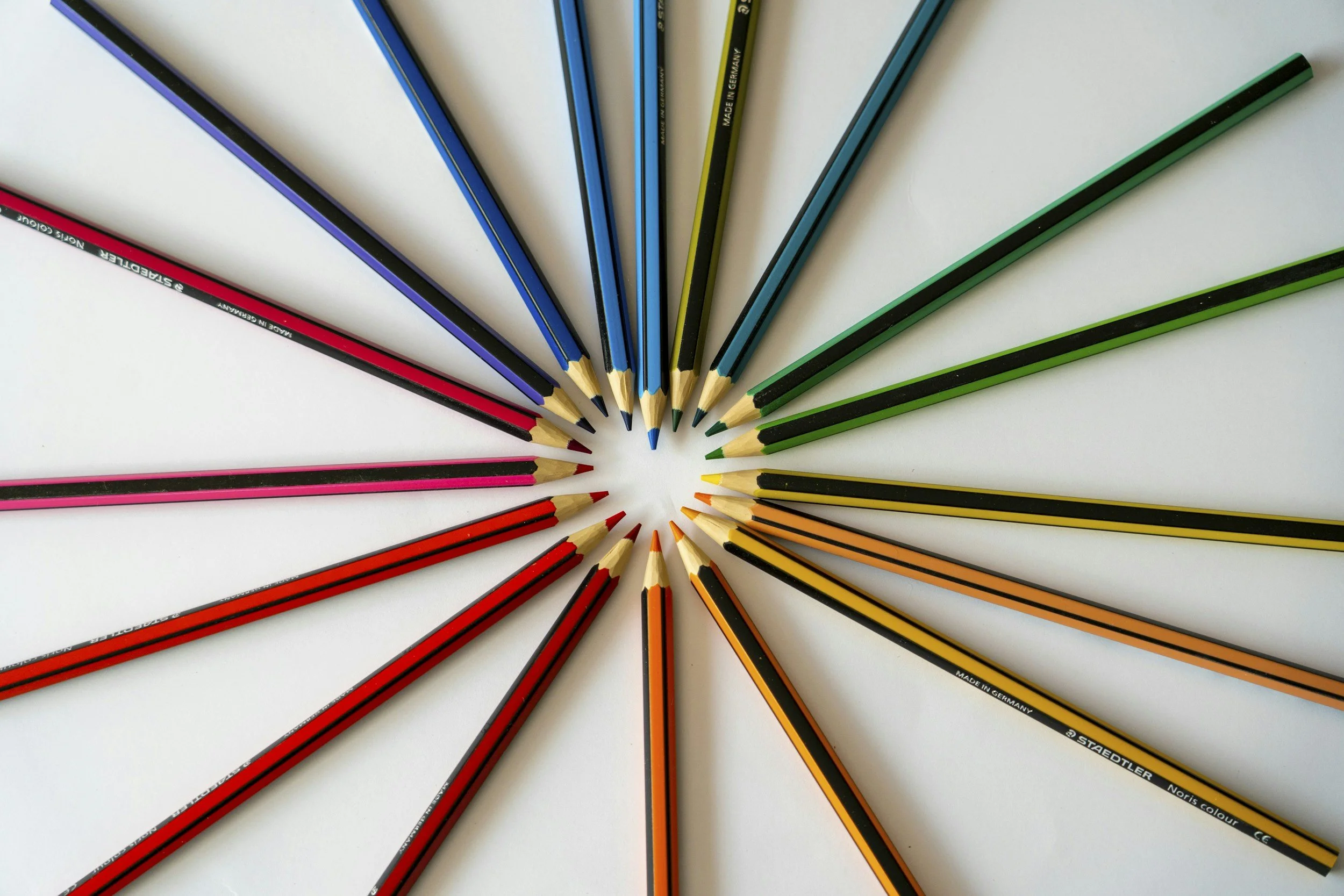
There’s something quietly powerful about watching a child make something.
They don’t usually start by asking whether it’s good enough. They don’t hold a crayon in mid-air and wonder whether their work will be ‘taken seriously’. They just begin. A line becomes a river. A cardboard box becomes a house, a spaceship, a shop, a dragon cave or whatever the moment requires. A song appears from nowhere. A poem isn’t yet a poem, it’s just a feeling that has found a rhythm.
For many of us, creativity at school was once woven into the ordinary fabric of the day. We painted, made things, wrote stories, acted out scenes, sang songs, drew maps, invented characters and coloured in with the kind of concentration usually reserved for heart surgery or assembling IKEA furniture without swearing (I particularly loved curling paper with scissors).
We didn’t necessarily call it creativity. We didn’t always think of it as special. It was just allowed.
Then, somewhere along the way, many adults stopped.
Not always suddenly. More like a slow closing of windows. We learned to be neat. To be realistic. To be sensible. Some of us were told we weren’t artistic and some had our work laughed at. Some simply absorbed the idea that creativity belonged to a certain kind of person. The talented ones or the dramatic ones. The ones who could draw hands without making them look like a blown up glove.
But creative therapy asks a different question.
Not, ‘Are you good at this?’
More, ‘What becomes possible when expression has more than one doorway?’
Creativity Isn’t Just Art Materials
When people hear the phrase creative therapy, they may imagine paints, clay, poetry, music or drama. And yes, these can be powerful, but creativity in therapeutic work is much broader than that.
Creativity can be a walk.
It can be the decision to leave the therapy room and notice what happens when two people move side by side rather than sit face to face. At Step By Step, we wholeheartedly advocate walk and talk therapy. Both myself and Simon are ecotherapists, so we know the value of taking therapeutic work into the natural world. We feel so passsionately about it, we include this learning in our level 4 diploma.
A path, a field, a tree line or a sudden change in weather can become part of the conversation. The landscape joins the work, quietly but meaningfully. I had a serendipitous moment recently where my client was talking about something very dark and unpredictable. Just when they were talking about their experience, the weather changed. The wind blew harder and the sky became darker. There were scattered raindrops in the air. This provided an amazing analogy for what was going on for the client and we used this to full effect.
A client may also speak differently when they’re moving. They may find it easier to access feelings when they’re not being directly looked at. They may notice something in the environment that becomes a metaphor. A blocked path, a fallen branch, a wide open space or a gate. Even a hill that feels like hard work before the view appears.
That is creativity too.
Creativity can also be an image. A simple diagram or a sketch of a nervous system. A map of parts, roles or patterns. It can be sticks on the ground used to represent family dynamics or stones arranged as boundaries. It can be chair work, object work, imagery, metaphor, writing, movement, silence or the spontaneous moment where a therapist says, ‘Grab three items near you and let’s see what they show us.’
That may sound almost too simple, but these moments can be surprisingly powerful. Three random objects can become a whole inner system (and a whole session). A mug might represent the responsible self. A pen might become the critic. A cushion might become the exhausted part that wants to lie down for approximately six years.
Creative therapy doesn’t need a studio. It doesn’t need perfect materials, what it does need is permission, curiosity and enough safety to see what emerges.
Creativity Creeps Into Everything
The more you work creatively, the more you realise it isn’t a separate technique stored in a special cupboard marked ‘Interesting Things To Do When Talking Gets Stuck’.
It creeps into everything.
The way we phrase a question can be creative. The way we use silence can be creative. Even a pause can create something. Space. Tension. Relief. Contact. Avoidance. A silence may say, ‘There’s something here.’ It may allow a client to find themselves rather than reach for the quickest answer.
A silence can be a blank page.
That doesn’t mean we abandon therapeutic structure. Quite the opposite. Good creative work needs safe edges and attunement, timing and care. But when used well, creativity opens the work rather than distracts from it.
It gives the client more ways to know themselves.
Sometimes a client can’t say directly what they feel, but they can choose an image or words. Sometimes they can’t explain the grief, but they can describe it as weather. Sometimes they can’t locate anger in words, but they can draw a boundary, move a chair or place a stick on the ground and say, ‘That’s where I stop.’
And suddenly something has changed.
Not because the stick is magic, although frankly some sticks do have an impressive amount of emotional authority. It changes because the inner world has become visible. The unconscious - which after all is what therapy is all about - bringing that into the concsiousness. What was tangled inside can now be seen, moved, questioned or rearranged.
When Words Are Too Small
Talking therapy is powerful, but language has limits. Sometimes clients have told the story so many times that the words have become smooth from overuse. We often hear “the client is stuck in the narrative”. Sometimes they understand themselves intellectually, but nothing shifts emotionally. Sometimes the client has excellent insight and a nervous system still behaving like it’s locked in 1997 with a packed lunch, a scratchy jumper and a permanent sense of dread.
Creative approaches can help bypass the overly polished narrative.
A poem can hold contradiction. An image can contain what isn’t yet ready to be spoken. A metaphor can soften the edges of something too painful to approach directly, a walk can regulate the body while the mind catches up and chair work can give voice to a part of the self that has never been allowed to speak. A psychoeducation image can help a client think, ‘Oh, that’s what’s happening to me. I’m not broken. There’s a pattern. I’m normal’
This is where creative therapy can be especially helpful for people who are anxious, neurodivergent, traumatised, highly defended or very cognitively skilled. The person who can explain everything may still need another way to feel, process and integrate what they know….and this isn’t always easy.
A poem might begin with one line:
‘I am tired of being the strong one.’
That line might become a doorway.
What is the tiredness made of?
Who first asked you to be strong?
What happens if strength softens?
What part of you is still waiting to be heard?
No worksheet can always reach that place. No amount of ‘thinking it through’ can necessarily compost what the body has been holding for years.
Poetry as a Therapeutic Container
Poetry is particularly interesting because it doesn’t require us to explain everything. It allows fragments. It welcomes silence. It can make room for the unsaid without rushing to tidy it up.
In therapy, poetry can be used in many ways. A client might respond to an existing poem, write a few lines of their own, collect words that fit a feeling or create a dialogue between different parts of the self. The poem doesn’t need to be ‘good’. It needs to be alive enough to reveal something.
Poetry also gives rhythm to experience and this can be regulating. The sound, pacing and shape of words can help clients feel their way into material gently. There’s something containing about a few lines of a poem. A beginning, a pause, a return. A little emotional fence around something that might otherwise feel too vast.
For therapists, coaches and practitioners, poetry can also deepen our listening. It trains us to notice image, tone, metaphor, gap and repetition. These are already present in therapy and clients speak in poetry all the time without realising it.
‘I feel like I’m carrying everyone.’
‘I’ve disappeared.’
‘It’s like walking on eggshells.’
‘There’s a wall.’
These aren’t just phrases. They’re maps.
What Can We Compost?
Creative therapy also invites a more ecological way of thinking about change. Rather than seeing difficult experiences as things to simply remove, we might ask what can be composted.
What has become overgrown?
What grew in drought?
What parts of the self have been left without light?
What needs pruning, feeding or replanting?
This kind of creative questioning can be surprisingly powerful. It gives clients language that feels less pathologising and more compassionate. The person isn’t broken. Their inner garden may simply have been shaped by weather, neglect, invasion, survival and seasons they didn’t choose.
Creative work helps us explore that garden without marching in with a clipboard and a strimmer.
It lets us ask softer, braver questions. What belongs here? What has been planted by someone else? What keeps returning no matter how often it’s cut back? What might grow if there was more space, nourishment and light?
These are therapeutic questions, but they don’t always feel clinical. Sometimes that’s exactly why they work.
The Practitioner’s Permission Slip
For practitioners, creative therapy can feel both exciting and exposing. Many therapists and coaches are comfortable with talking and listening, but less confident when creativity enters the room. We may worry about doing it wrong. We may wonder whether clients will think it’s childish. We may feel our own school-based ghosts shuffling around muttering, ‘You were never very good at this.’
But creative work doesn’t require us to become artists.
It asks us to become curious….and perhaps courageous.
It asks us to hold the process rather than control the outcome. To trust that meaning can emerge through image, rhythm, symbol, story and metaphor. To allow the client to surprise themselves. I often find myself saying something like “I’m picturing Doc from Back to the Future when you talk about your passion for succeeding”.
And perhaps it asks us to remember something too. Before creativity became a skill, a product or a personality type, it was simply a way of being in the world.
A natural human language.
An Invitation Back to Creativity
Creative therapy is powerful because it restores permission. Permission to explore. To play. To not know. To make meaning sideways. To meet the self through image, word, metaphor, movement, nature, objects and silence rather than always through analysis.
It’s being free to express.
For some clients, this can be the first time they experience themselves as more than a problem to solve. For some practitioners, it can bring new depth, vitality and flexibility into the work. You may even hear them saying “Oo I love this”.
And for many of us, it may reconnect us with something we quietly put down years ago.
Not because we lacked creativity.
Because somewhere along the way, we forgot we were allowed.
If you’re a therapist, counsellor, coach or trainee interested in exploring creative approaches further, including the therapeutic use of poetry, take a look at our upcoming CPD programme here:
